Loose-Leash Puppy Walking: 7-Day Beginner Plan
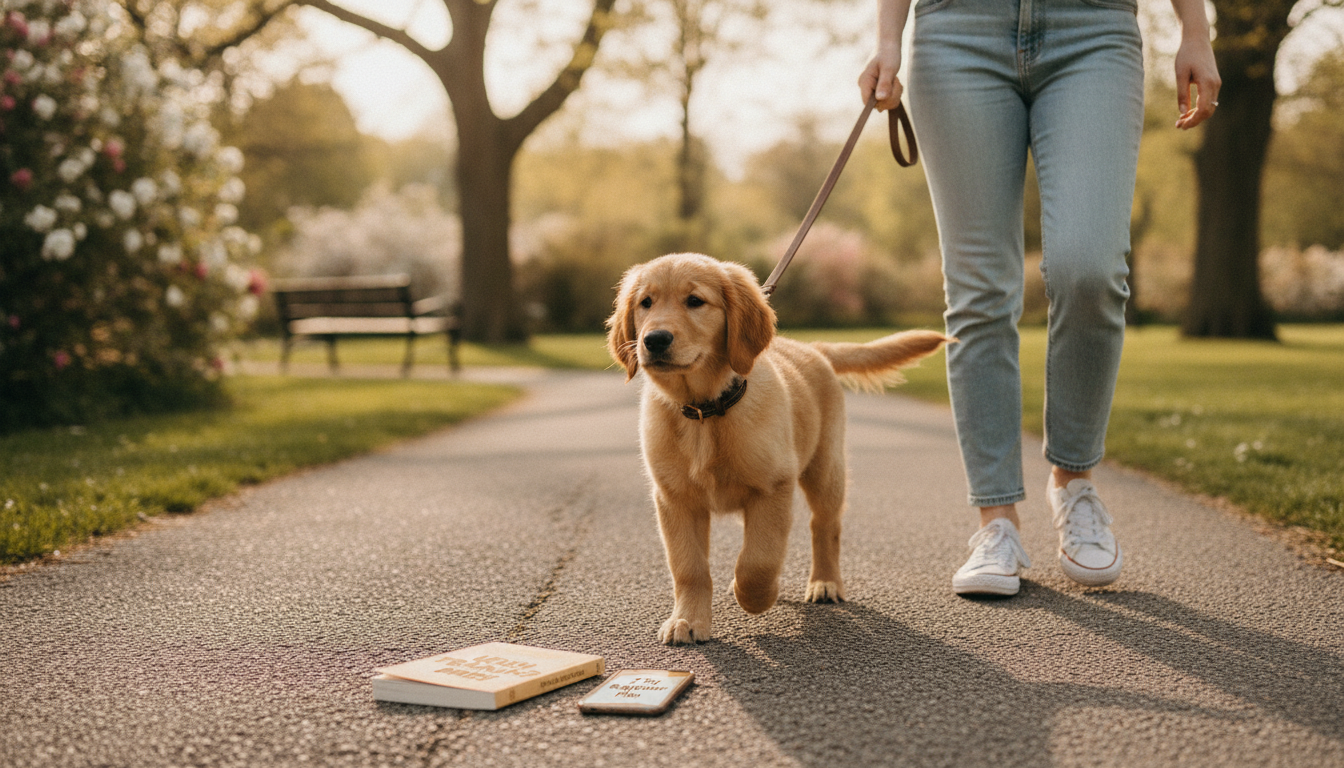
Leash Training Made Easy: A Beginner-Friendly Puppy Guide with Step-by-Step Methods
A puppy that walks calmly on a leash is safer, easier to exercise, and more confident in new places. The easiest way to get there is to break leash walking into small, repeatable skills—then practice for a few minutes at a time so your puppy can “win” often. Below is a beginner system you can follow day by day, plus simple AI-assisted scripts you can copy to keep your timing and rules consistent.
What “good leash walking” looks like
- The leash stays loose most of the time; brief tension happens, but it’s followed by an immediate reset back to slack.
- Your puppy checks in (looks back or returns near your leg) when something interesting appears.
- Your puppy can stop, turn, and change pace without dragging you forward.
- Realistic expectations: puppies will sniff and pause; the real success is returning to a loose leash quickly.
Gear setup that makes training easier
Great training is mostly skill and consistency, but the right setup removes friction—especially for beginners.
- Collar vs. harness: A well-fitted Y-front harness often reduces throat pressure and helps you stay calm and steady while you teach.
- Leash choice: Start with a standard 4–6 ft leash for clear feedback. Avoid retractable leashes during training because they “teach” constant tension.
- Treats and marker: Use pea-sized soft treats. Pair them with a clear marker word (“Yes”) or a clicker to pinpoint the exact moment the leash goes slack.
- Comfort and safety checks: Two-finger fit on collar/harness, ID tags on, and choose cooler pavement times. Early walks should be quiet, not crowded.
| Item | Why it helps | Beginner tip |
|---|---|---|
| Y-front harness or flat collar | Comfort and control without pain | Fit snugly; avoid rubbing at armpits |
| 4–6 ft leash | Consistent communication | Hold with relaxed arms; keep slack available |
| Treat pouch + soft treats | Fast rewards for tiny wins | Reward frequently at first—every few steps is fine |
| Clicker or marker word | Clear timing | Mark the moment the leash goes slack |
| Poop bags + water | Stress-free outings | Keep walks short and positive early on |
Before the sidewalk: teach the leash basics indoors
Indoor practice keeps distractions low so your puppy can learn the rules faster.
- Create a calm association: Clip leash on, feed a treat, unclip. Repeat until your puppy stays relaxed.
- Teach “follow me” in a hallway: Take 1–3 steps, mark “Yes,” reward at your side. Stop while it’s still fun.
- Introduce a check-in habit: Pause and wait silently. When your puppy looks at you, mark and reward.
- Add gentle movement: Walk a small circle; reward when your puppy stays within the “bubble” near your leg.
Step-by-step method for loose-leash walking
Step 1 — Choose a side and a reward zone
Pick left or right and stick with it. Deliver treats near your knee/hip so your puppy learns where “good walking” happens.
Step 2 — Start with micro-walks
Do 10–30 seconds of walking, then a break (sniff time or a few calm pets). Repeat several times instead of pushing one long session.
Step 3 — Use the “stop when tight” rule
The instant the leash tightens, stop moving. Say nothing; just become a tree. When your puppy creates slack (even by shifting weight back), mark “Yes” and continue.
Step 4 — Add an “about-turn” reset
Step 5 — Release to sniff (on purpose)
Step 6 — Build duration and distractions gradually
Common leash problems and fast fixes
A simple 7-day practice plan
AI-assisted practice scripts to stay consistent
Safety, socialization, and when to get help
- Avoid punishment-based tools or harsh corrections; they can increase fear and reactivity in sensitive puppies. The AVSAB summarizes the benefits of humane training methods here: https://avsab.org/resources/position-statements/.
- Socialization is exposure with comfort: keep distance, pair new sights/sounds with treats, and leave before stress escalates. The AKC has a helpful overview of leash walking foundations: https://www.akc.org/expert-advice/training/teach-your-dog-to-walk-on-a-leash/.
- Red flags: persistent coughing/gagging on walks, sudden refusal to move, limping, panic, or escalating aggression—consult a veterinarian or a qualified trainer.
- Choose calm times and routes; prioritize confidence-building over distance covered.
A guided resource for beginners who want a clear system
If you’d rather follow one repeatable routine with ready-to-use AI practice scripts and beginner-friendly troubleshooting, see Leash Training Made Easy | Puppy Training Guide for Beginners. Stick with the same routine daily for 1–2 weeks, track progress, then increase distractions gradually.
For handlers who want a calmer mindset and a simple way to keep walks restorative, Nature’s Healing Power Checklist: Boost Your Mental Health with the Benefits of Nature can help you build a low-pressure routine that supports consistency—especially during the early, messy stage of puppy training.
FAQ
How long does it take to leash train a puppy?
Noticeable improvement often shows up in 1–2 weeks when you practice short sessions daily and reward heavily. Reliability around big distractions (dogs, kids, busy sidewalks) usually takes longer—often several weeks to a few months—depending on age, consistency, and environment.
What should be done when the puppy pulls hard on the leash?
Stop moving the moment the leash goes tight, wait for slack, then mark and reward before continuing. If pulling continues, use a calm 180° about-turn reset and increase distance from whatever is triggering the pull, rewarding check-ins as your puppy reorients to you.
Is a harness better than a collar for leash training?
Either can work when used gently, but many beginners prefer a properly fitted Y-front harness because it reduces throat pressure and can make training calmer. The key is fit and technique: reward slack leash, avoid jerks, and use consistent resets.















Leave a comment