Indoor Cat Toys That Beat Boredom: Play & Puzzle Picks
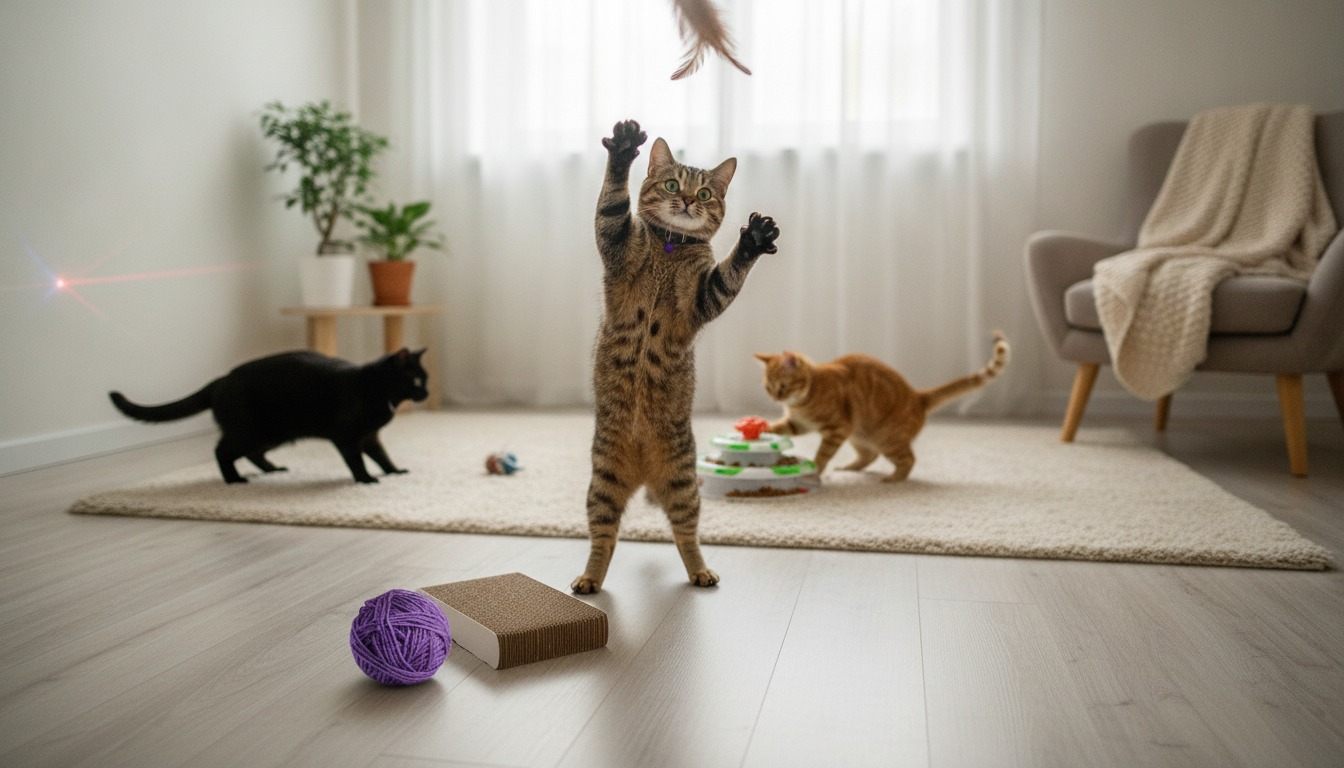
Indoor cats thrive when their day includes short bursts of hunting-style play, chances to climb and perch, and puzzles that turn meals into a challenge. The right toys help prevent boredom behaviors (night zoomies, scratching furniture, over-grooming) and support healthy weight, confidence, and bonding. Use this guide to match toy types to your cat’s age, energy level, and play style—then rotate options so everything feels “new” again.
Why indoor cats need daily stimulation
Cats are wired for a repeatable “hunt cycle”: stalk → chase → pounce → “capture” → eat → rest. When indoor life skips the stalking and chasing, that energy often leaks out as restless midnight sprints, attention-yowling, or destructive scratching.
- Play satisfies natural hunting cycles and helps your cat feel “successful” instead of frustrated.
- Mental enrichment can lower stress and helps shy cats gain confidence through predictable, low-pressure games.
- Regular activity supports joint health and weight management, especially for treat-motivated cats.
- Small routines beat marathon sessions: two 5–10 minute playtimes typically work better than one long session that ends in overstimulation.
For more on behavior and enrichment basics, reputable starting points include the American Association of Feline Practitioners (AAFP) guidelines and the ASPCA enrichment resources.
Toy categories that keep cats engaged
The most “stimulating” toy isn’t always the fanciest—movement style, novelty, and your cat’s preferences matter more than price. Mix a few categories so your cat can chase, solve, and wrestle.
Wand and teaser toys
These are ideal for interactive play that mimics prey. Make the lure scurry in zigzags, pause like it’s hiding, then dart away. Let your cat win regularly by ending with a catch (followed by a small treat or meal) to complete the hunt cycle.
Puzzle feeders and treat dispensers
Great for fast eaters and bored snack-seekers. Start easy, then increase difficulty slowly so your cat doesn’t give up. Use part of the daily kibble allowance to prevent accidental overfeeding.
Ball tracks and rolling toys
These support independent play. Choose stable designs that don’t tip and balls that won’t pop out easily. If noise is a concern (or you have downstairs neighbors), look for quieter materials and place the toy on a mat for grip.
Kicker toys
Perfect for bunny-kickers and “wrestlers.” Longer shapes give cats something to grab with front paws while kicking with the back feet. Crinkly fabric and catnip/silvervine can increase interest.
Catnip and silvervine toys
Many cats respond strongly to silvervine, while others prefer catnip—or neither. Rotate exposure so the scent stays novel, and store scented toys in a sealed container between sessions.
Sound/light and electronic motion toys
These can be useful in short bursts, especially when you’re busy. Use sparingly for easily overstimulated cats, avoid harsh sounds, and never aim lights at your cat’s eyes. Timers help keep novelty high.
Climbing and scratching add-ons
Scratchers, ramps, cat trees, and window perches aren’t “toys,” but they amplify play by adding vertical territory, safe scratching outlets, and better “hunt vantage points.”
| Toy type | Best for | Tips | Watch-outs |
|---|---|---|---|
| Wand/teaser | High-energy cats, bonding, confidence-building | Vary speed; hide-and-reveal; finish with a catch and a small treat/meal | Avoid leaving unattended; check string/feathers for wear |
| Puzzle feeder | Food-motivated cats, weight support, boredom relief | Start simple; use part of daily kibble; clean regularly | Too hard can cause quitting; avoid tiny pieces that can crack |
| Rolling ball/track | Independent play, nighttime enrichment | Choose quiet materials; place on a mat for grip | Small balls can roll under appliances—use larger sizes |
| Kicker | Wrestlers and bunny-kickers | Offer after a wand session; sprinkle catnip/silvervine | Replace if seams open or stuffing shows |
| Electronic motion toy | Short solo sessions when humans are busy | Use on a timer; rotate location weekly | Overuse can reduce interest; supervise if parts are chewable |
How to pick toys by age, temperament, and home setup
- Kittens: Choose lightweight, durable toys and keep sessions short and frequent to prevent overtired biting. Offer a kicker early to redirect grabby play from hands.
- Adults: Mix high-intensity chase toys with puzzles. Rotate 3–5 toys weekly so “old” toys feel new again.
- Seniors: Prioritize gentle chase, slow rollers, soft kickers, and lower climbing options. Keep sessions shorter with longer warm-ups.
- Shy or anxious cats: Start with distance play (a longer wand), quiet materials, and predictable patterns. Skip loud electronic toys until confidence improves.
- Multi-cat homes: Provide duplicates and separate play zones. Parallel play (two wands) reduces competition and helps each cat stay focused.
Play routines that actually work (and don’t burn you out)
A repeatable routine beats random bursts of play. Cats learn patterns quickly, and that predictability often reduces attention-seeking at inconvenient times.
Safety checks and toy maintenance
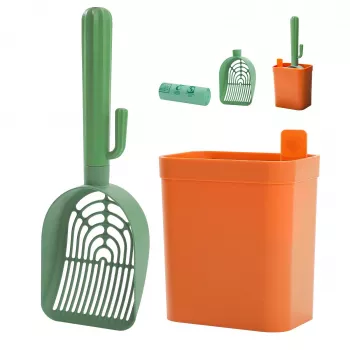
Featured pick: a simple way to refresh indoor playtime
- Best Toys for Stimulating Indoor Cats – Ultimate Guide to Keeping Your Feline Active & Engaged
- Nature’s Healing Power Checklist: Boost Your Mental Health with the Benefits of Nature
FAQ
How many minutes of play does an indoor cat need each day?
Most indoor cats do well with about 10–30 minutes total per day, split into short 5–10 minute sessions. Adjust based on age, fitness, and health, and prioritize a stalk-chase-catch pattern over nonstop motion.
Why does a cat lose interest in toys so quickly?
Cats habituate to the same toy and the same movement pattern. Rotating toys, changing where you play, refreshing scent (catnip/silvervine), and ending each session with a “catch” can keep interest higher.
Are electronic cat toys safe to leave on when nobody is home?
It depends on the design: sturdy, enclosed toys are safer for unattended use than anything with strings, feathers, or chewable parts. Timers, regular inspections, and supervised sessions for more complex toys reduce risk.















Leave a comment