Find Your Personal Style Without Guessing (Simple Framework)
Why style feels confusing (and why guessing rarely works)
Personal style can feel oddly slippery because it’s rarely one problem—it’s usually a stack of small mismatches. A closet can be full and still deliver the “nothing to wear” feeling when pieces don’t support the same overall vibe, when they don’t suit your day-to-day life, or when the silhouettes don’t feel like you once they’re on your body.
Trend-led shopping adds another layer of friction. When purchases are made for a moment—one special top, one bold color, one “maybe I’ll wear this” shoe—you end up with one-off items that don’t combine into outfits. That increases decision fatigue: more choices, less clarity, and more time spent trying (and rejecting) combinations. If you’ve ever felt mentally exhausted after getting dressed, you’re not alone; decision fatigue is a recognized phenomenon tied to stress and depleted mental bandwidth (Kessler’s overview of decision fatigue; APA on stress and decision-making).
Inspiration boards can help, but they often stay abstract. A photo can communicate a mood without telling you what to buy: the exact neckline, hem length, rise, shoe shape, or color harmony. A useful style process turns inspiration into boundaries—your palette, preferred fits, and a short list of go-to looks—so you stop guessing and start repeating what works.
A no-guessing style framework: Identity, Lifestyle, Outfit Formulas
This framework is designed to be simple and repeatable. Instead of hunting for a “perfect style,” you define a few decisions that make everything else easier.
1) Identity: choose 3–5 style words
Pick three to five words that describe how outfits should feel. Examples: polished, relaxed, creative, minimal, romantic, sporty, classic, edgy. The goal is not to sound fancy—it’s to create a filter. If something doesn’t match at least two of your words, it’s usually not worth bringing home.
2) Lifestyle: dress for your actual calendar
List the real situations you dress for: work, errands, school pickup, social plans, travel, events, weather extremes. Then match your wardrobe to those needs. When your closet is built for someone else’s life (or an imaginary version of yours), it will always feel off.
3) Outfit formulas: create templates you can repeat
Formulas are “plug-and-play” outfits you can repeat with different colors, textures, and layers. Think: “straight-leg jeans + fitted top + structured layer” or “midi skirt + knit + boots.” These formulas become your default—so getting dressed is fast, and shopping becomes more strategic.
4) Fit priorities and comfort rules
Decide what you like on your body: preferred rise, hem lengths, neckline shapes, sleeve volume, and how fitted vs. oversized you enjoy. Then define comfort dealbreakers (itchy fabric, tight waistbands, restrictive shoulders, high heels). These two categories prevent the most common mistake: buying something you like in theory but avoid in real life.
Style clarity checkpoints
| Checkpoint | What to decide | Quick test |
|---|---|---|
| Style words | 3–5 descriptors for your look | Does each outfit match at least 2 words? |
| Lifestyle needs | Top 3 places you dress for | Do you have 3 complete outfits per place? |
| Palette | Neutrals + 2–4 accent colors | Do most tops work with most bottoms? |
| Silhouettes | Preferred fits and proportions | Do you feel like “yourself” in the mirror? |
| Shoes & bags | Default options that finish outfits | Can you build 10 outfits around 2 pairs of shoes? |
Use a style guide + workbook to turn inspiration into decisions
To translate “I like that” into “I know what to buy,” start with two lists:
- Yes list: fabrics, cuts, colors, and overall vibes you consistently love and repeat.
- No list: anything you avoid wearing—uncomfortable fabrics, fussy fits, colors that fight your palette, or silhouettes that never feel right.
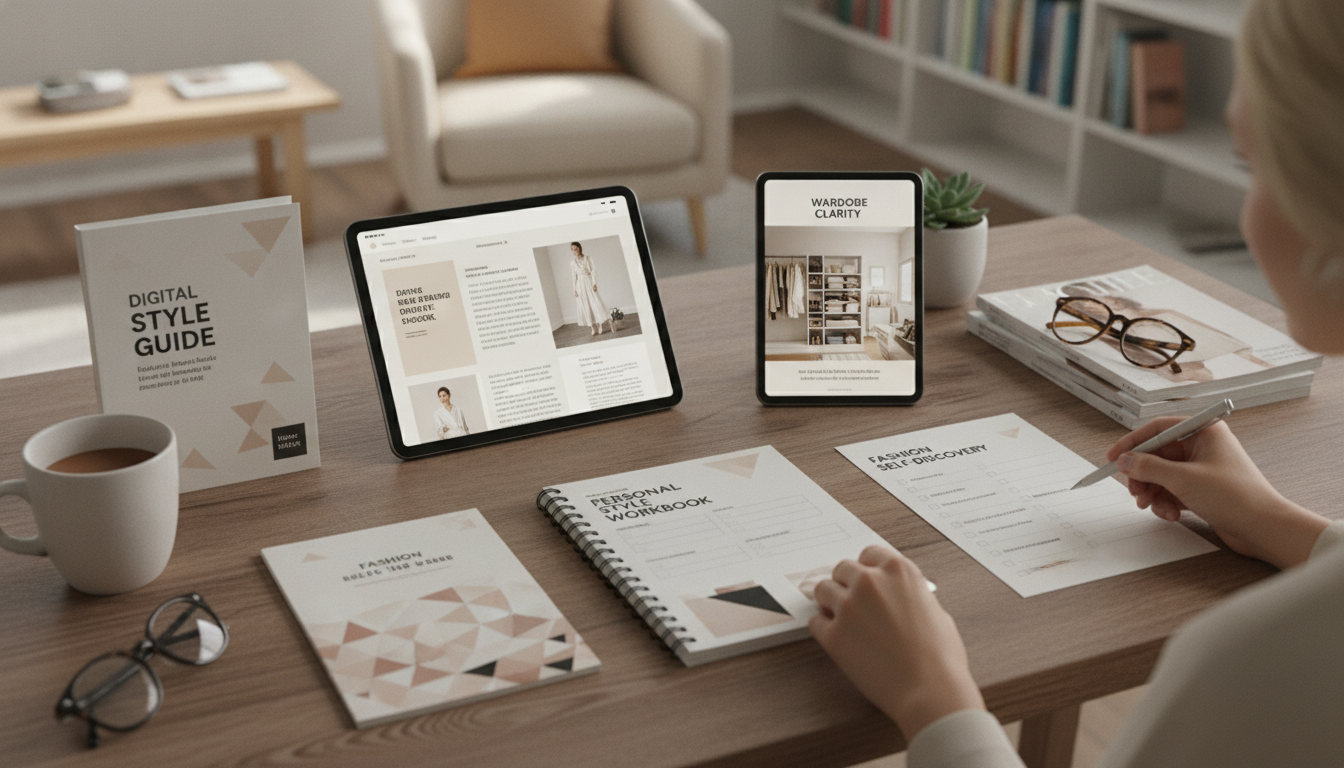
If you want a structured way to document these choices, a guided resource can keep the process moving in the right order. The Find Your Personal Style Without Guessing – Digital Style Guide, Personal Style Workbook, Wardrobe Clarity eBook, Fashion Self-Discovery Checklist is designed to help define style words, clarify a palette, and turn outfit ideas into repeatable formulas so shopping feels less emotional and more intentional.
Closet edit for wardrobe clarity: keep, tailor, retire, replace
Build outfit formulas that make getting dressed fast
Shopping without second-guessing: a simple checklist
If mental overwhelm is part of why shopping turns impulsive, pairing wardrobe decisions with simple reset habits can help. The Nature’s Healing Power Checklist: Boost Your Mental Health with the Benefits of Nature is a small, practical tool for building calmer routines—useful when you’re trying to make clearer choices (including what you bring into your closet).
A guided digital style kit to make the process easier
FAQ
How long does it take to find a personal style that feels consistent?
A focused weekend is usually enough to define style words and a basic palette, then 1–2 weeks of real-life outfit testing helps you refine what you actually reach for. Consistency comes from repeating a few outfit formulas and adjusting after you’ve worn them in your day-to-day routine.
What if inspiration photos don’t match real life (job, weather, comfort needs)?
Pull the transferable elements—color harmony, proportions, textures, and overall mood—then rebuild them in versions that work for your setting. You can keep the same vibe while swapping fabrics, layers, and shoes to fit your climate, workplace expectations, and comfort rules.
How can a checklist prevent impulse buys?
A checklist forces a purchase to earn its place: it must match your palette, silhouettes, and lifestyle needs, pass your comfort dealbreakers, and create at least three outfits with what you already own. Adding a 24-hour pause and writing the exact wardrobe gap dramatically reduces “cute but never worn” purchases.










Leave a comment