Cold Press Juicer: Wide Chute, High Yield, 200W Power
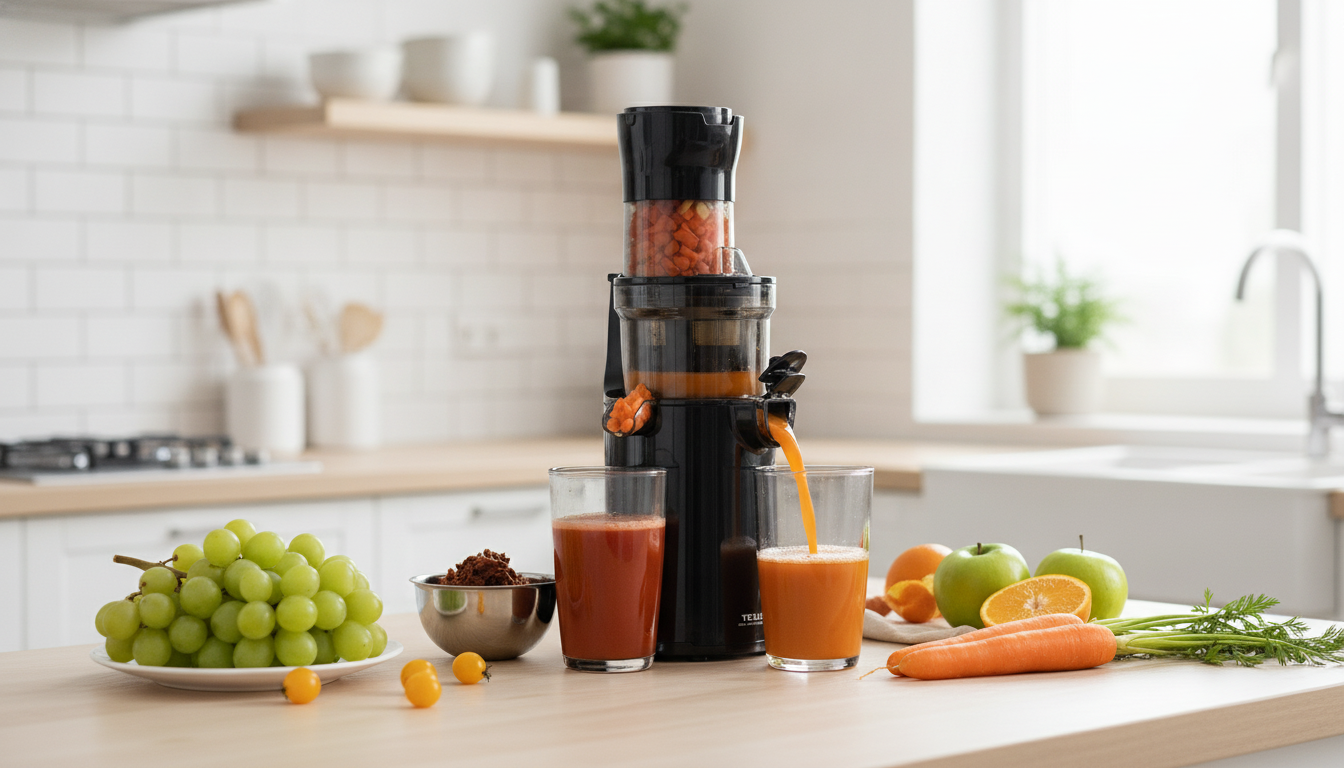
Smoother, Quieter Juice: Why a Cold Press Juicer Fits Real-Life Routines
A cold press juicer is built for people who want smoother juice, less foam, and more juice from the same produce—without turning the kitchen into a full cleanup project. With a wide chute and a 200W motor, this style of slow juicer supports quicker prep (fewer cuts), steady processing for common fruits and vegetables, and a drier pulp that signals efficient extraction. If daily juicing sounds appealing but the mess and noise don’t, a cold press setup is often the easiest way to make it stick.
If you’re shopping for a reliable everyday option, the Cold Press Juicer Machine with Wide Chute & High Juice Yield, 200W Motor is designed around the exact pain points most people run into: too much chopping, too much foam, and too much wasted produce.
What cold press juicing changes in everyday use
Cold press juicers (also called slow or masticating juicers) work by crushing and pressing produce instead of using high-speed spinning blades. That difference shows up immediately in the glass and in the sink.
- Less froth and a smoother texture are common because the juice isn’t whipped full of air.
- Leafy greens and fibrous items often come out with a drier pulp than many centrifugal models, which can mean better extraction.
- Noise tends to be lower-pitched and less “jet engine,” making it easier to run early in the morning.
- Natural separation can happen—especially with apples, celery, and greens—so a quick stir before serving is normal.
- Batch juicing is simpler: process in a steady run, pour into sealed containers, and refrigerate promptly.
For balanced guidance on where juice fits in an overall eating pattern, see Harvard T.H. Chan School of Public Health’s overview on juicing.
Wide chute convenience: faster prep with fewer cuts
A wide feed chute can be the difference between “juicing sometimes” and “juicing most days.” When produce fits more naturally, you spend less time chopping and less time hovering over the machine feeding tiny pieces.
- Wide chutes help reduce chopping for apples, pears, cucumbers, and thick citrus wedges (peel as desired).
- Shorter prep time supports consistency—when setup is quick, it’s easier to keep the habit.
- Fewer knife steps can mean a safer, calmer workflow, especially on busy mornings.
- For smoother feeding, alternate soft items (ripe pears, orange segments) with firm items (carrot, celery) to keep the auger moving evenly.
High juice yield: what affects it (and how to get it)
“High yield” isn’t just about the machine—it’s also about what you juice and how you feed it. A few small technique tweaks can noticeably reduce waste and improve texture.
- Produce type matters most: cucumbers and citrus are naturally high-yield; leafy greens and herbs are lower-yield but can be optimized.
- For greens, roll leaves into bundles and feed slowly. Pair with apple or cucumber to improve pressing and reduce leftover moisture.
- For hard produce like carrots and beets, cut into lengths that feed smoothly and avoid forcing pieces (forcing can cause clogs and wet pulp).
- For soft fruits (berries, very ripe peaches), combine with firmer produce to prevent pulpy buildup and improve separation.
- Watch the pulp: drier pulp generally signals efficient extraction; very wet pulp suggests feeding too fast or overloading with soft produce.
200W motor: power where it matters for slow juicing
In a slow juicer, the motor isn’t about high RPM—it’s about steady torque. A 200W motor is designed to keep pressing consistently through dense items and longer runs without requiring you to muscle the pusher.
Feature checklist: quick comparison for daily juicing
Everyday produce and what to expect
| Produce | Prep | Texture outcome | Yield tip |
|---|---|---|---|
| Apples | Halve/quarter if needed | Crisp, low foam | Alternate with celery for smoother flow |
| Carrots | Cut into short sticks | Bright, dense juice | Feed slowly for drier pulp |
| Celery | Trim strings, cut lengths | Clean, savory | Use reverse if fibrous strands bind |
| Cucumber | Minimal trimming | Light, high volume | Add lemon/ginger for balance |
| Leafy greens | Bundle/roll leaves | Green, delicate | Pair with apple/cucumber to boost extraction |
| Citrus | Peel or segment | Smooth, fragrant | Remove thick pith if bitterness is a concern |
Cleaning and care that keeps performance steady
For practical reminders on staying hygienic around food-contact surfaces, review the USDA’s guidance on cleanliness and food safety.
Who this juicer style fits best
In-stock picks to support a calmer daily routine
- Cold Press Juicer Machine with Wide Chute & High Juice Yield, 200W Motor ($69.51)
- Nature’s Healing Power Checklist: Boost Your Mental Health with the Benefits of Nature ($2.99)
- Vinyl Record Player C260, 3-Speed Bluetooth Vintage Turntable with Speakers ($47.51)
FAQ
Can whole apples go into a wide chute cold press juicer?
Some apples may fit depending on the exact chute width, but halving apples is common for smoother feeding and less strain. Removing stems is recommended, and removing seeds is optional (many people do it for taste consistency).
Does cold press juice last longer in the fridge than juice from a fast juicer?
Cold press juice often has less foam and may hold quality a bit better, but storage time still depends on freshness, sanitation, and airtight refrigeration. In many home kitchens, aim to drink it within 24–72 hours and discard if it smells off, tastes fermented, or shows unusual fizzing.
What should be done if the juicer jams on celery or leafy greens?
Stop the machine and use reverse (if available) to clear the jam, then restart with a slower feed pace. Cut celery and greens into shorter lengths and alternate them with firmer produce like apple or carrot; avoid forcing with the pusher.













Leave a comment