Calm, Clear Speaking: Confidence for Meetings & Talks
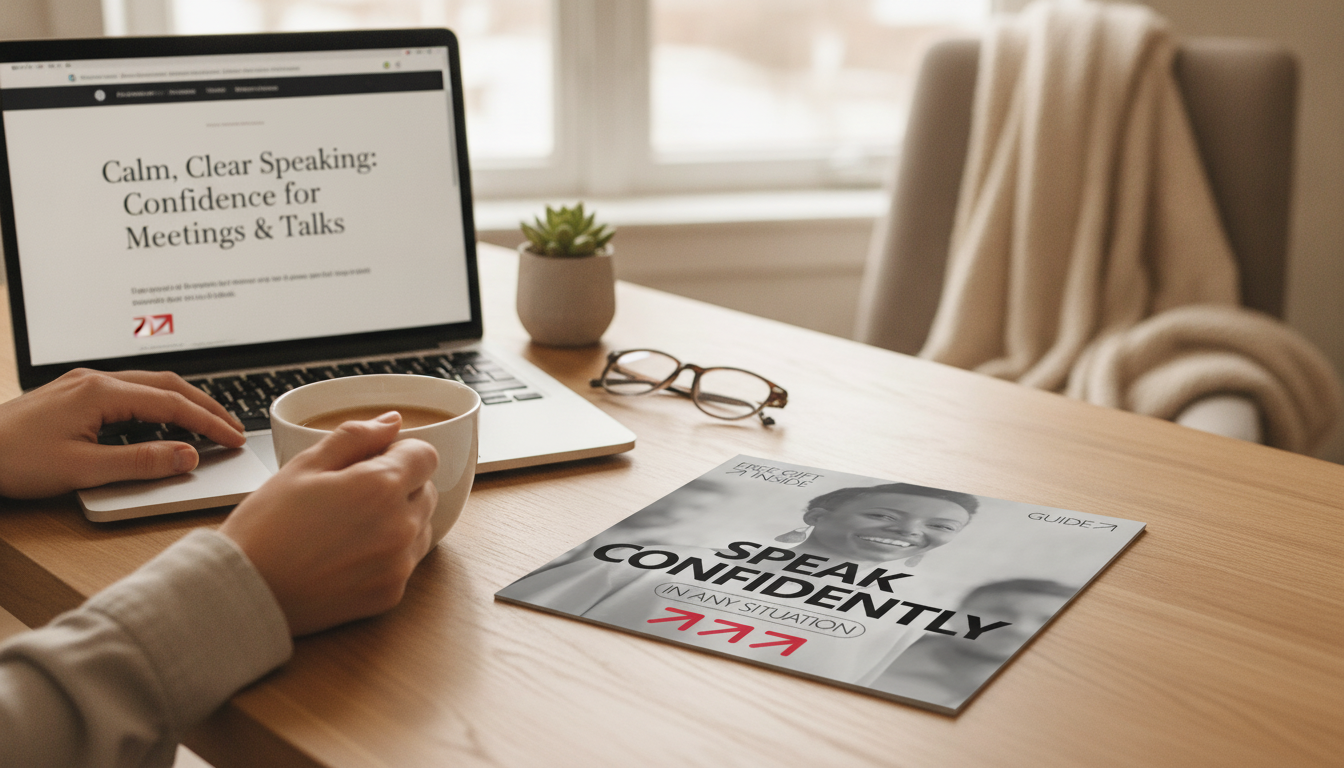
Speak Confidently in Any Situation: A Practical Plan for Calm, Clear Public Speaking
Confidence in speaking isn’t a personality trait—it’s a set of skills that can be trained. Whether you’re sharing an update in a meeting, answering questions in an interview, or giving a full presentation, the goal is the same: stay calm, sound clear, and connect with the people in front of you. The routines below keep it practical—simple preparation, quick body-and-voice resets, and reliable ways to recover when nerves show up.
What Confident Speaking Looks Like (and What It Isn’t)
Confident speaking is a mix of clarity, composure, and connection—not perfection. You can be nervous and still be effective. You can miss a word and still be credible. What matters is that listeners follow your point and trust you to guide them.
- Confidence is not “no nerves.” It’s staying steady even when you feel adrenaline.
- Confidence is not being born a “natural.” Strong speakers repeat fundamentals until they’re automatic.
- Confidence is not mistake-free delivery. One slip rarely matters; how you continue matters a lot.
Practical markers to aim for: a steady pace, purposeful pauses, audible volume, and one clear takeaway people remember after you’re done.
Start With a Reliable Speaking Framework
When pressure rises, structure becomes your safety net. A simple framework that works almost anywhere is: Point → Proof → Example → Close. It keeps you from rambling and helps you sound decisive.
- Create a one-sentence throughline: “The main point is…” This becomes your anchor if you get thrown off.
- Open with an outcome: tell listeners what they’ll be able to decide, do, or understand by the end.
- Close with a next step: a decision request, a summary + deadline, or a clear call-to-action.
- Keep notes minimal: 3–5 bullets, not a script, so you don’t fall into monotone reading.
Fast templates for common speaking moments
| Situation | Best opening | Middle focus | Strong close |
|---|---|---|---|
| Team update | Headline first: status + impact | Top 3 items: progress, blockers, next steps | Ask: decision/help needed + timeline |
| Presentation | Promise: problem + payoff | 3 key points with examples | Recap + clear action |
| Interview | Role-fit statement | Story: situation, action, result | Tie back to company goal |
| Networking intro | Name + what you do + who you help | One proof point | Invite: question or next contact step |
| Difficult conversation | Shared goal + calm context | Facts, impacts, options | Agreement on next step |
Calm the Body to Free the Voice
Nerves are physical first: faster heart rate, tighter throat, shallow breathing. The fastest way to sound more confident is to reduce physiological arousal so your voice can work normally.
- Two-minute reset: breathe with a longer exhale than inhale (for example, inhale 4 seconds, exhale 6–8). This signals your system to downshift.
- Posture and grounding: feet planted, knees soft, shoulders down. Lightly anchor your hands (on a table edge, a notecard, or relaxed at your sides) to cut fidgeting.
- Quick warm-up: hum or do a lip trill for 15–20 seconds, then speak three sentences clearly at a relaxed volume.
- Pacing tool: insert intentional pauses after key points. Pauses feel long to you, but sound thoughtful to others.
- Volume goal: aim to be comfortably heard at the back of the room—or through the farthest laptop speaker on a call.
For more on how stress shows up in the body (and why calming techniques help), the American Psychological Association’s stress resources are a solid reference: https://www.apa.org/topics/stress.
Build Confidence With Micro-Reps (Not Marathon Practice)
One long practice session can help, but confidence grows faster with short, frequent “micro-reps.” Think of it like training a reflex: you’re building a familiar groove your body can find under pressure.
Handling Anxiety in the Moment: What to Do When Nerves Hit
When anxiety is frequent or intense, it can help to learn more about how it works clinically (and what supports exist). The National Institute of Mental Health has a clear overview here: https://www.nimh.nih.gov/health/topics/anxiety-disorders.
Situational Playbook: Adapt Your Confidence to Any Room
For additional practical speaking pointers, Toastmasters maintains a helpful set of tips: https://www.toastmasters.org/resources/public-speaking-tips.
A Simple Daily Routine for Steady Improvement
Digital Tools to Make Practice Easier (and More Consistent)
- Speak Confidently in Any Situation – Practical Guide on how to improve public speaking confidence | Digital Download: a compact, repeatable practice system with prompts, exercises, and checklists to make openings, structure, and closings feel automatic.
- Nature’s Healing Power Checklist: Boost Your Mental Health with the Benefits of Nature: a simple way to support your baseline stress level, which can make speaking nerves easier to manage day-to-day.
FAQ
How long does it take to feel confident speaking in public?
With frequent micro-reps, many people notice quick wins in a few days (stronger openings, better pausing, less rushing). Bigger, steadier confidence typically builds over 3–8 weeks as you record, review, and repeat in real situations.
What if anxiety makes my voice shake or my mind go blank?
A shaky voice is a common stress response; use a longer exhale, plant your feet, and slow your first sentence. If you blank, try: “Let me say that another way—my main point is [throughline],” then move to your next bullet.
How can I sound confident on Zoom or video calls?
Speak a touch slower, pause to prevent overlap, and look at the camera for your key lines (especially your opening and close). Keep brief notes at eye level, and slightly boost volume so your voice stays clear through microphones and speakers.















Leave a comment