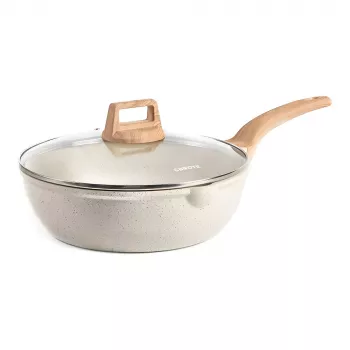
12-Inch Deep Nonstick Sauté Pan (5.5 Qt) with Lid
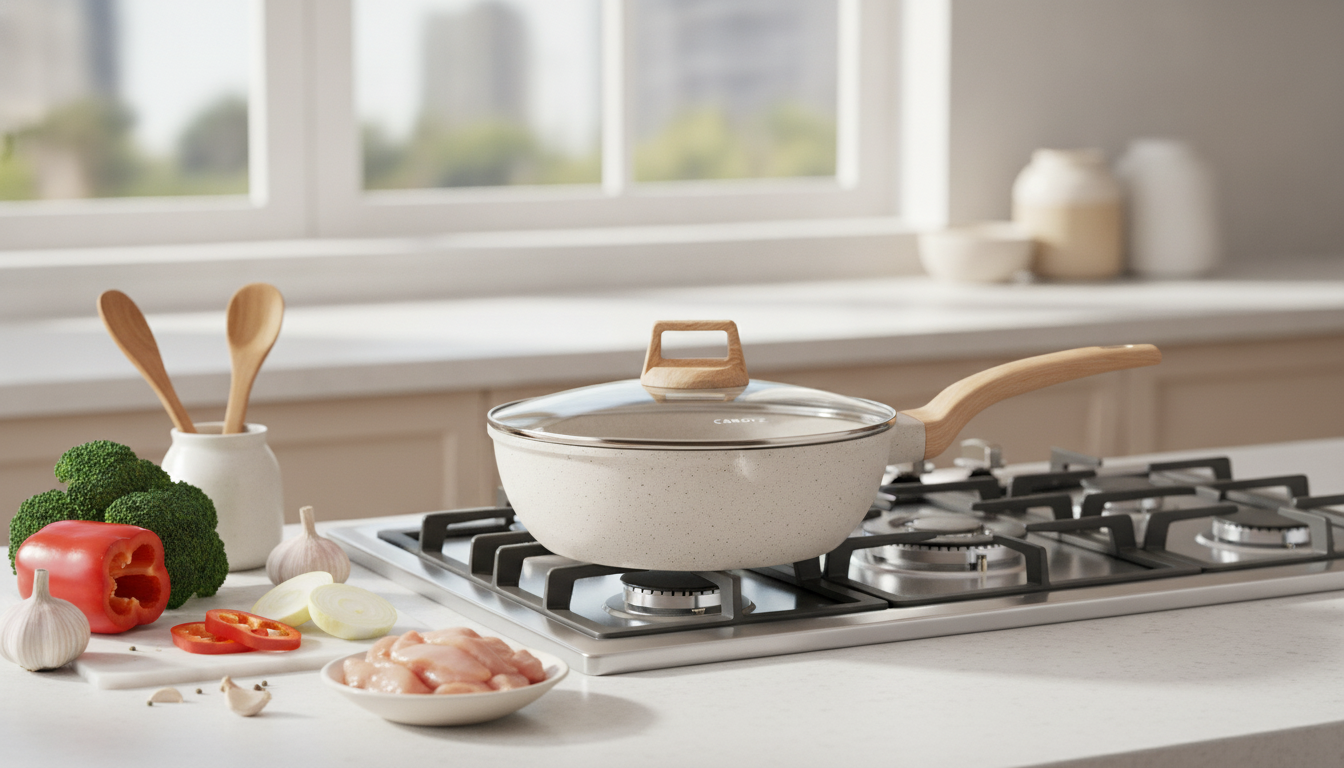
12-Inch Deep Nonstick Frying Pan with Lid: A 5.5 Qt Workhorse for Family-Size Cooking
A deep, wide sauté pan can take the place of several pieces of cookware—especially when it’s large enough for one-pan meals, frying, simmering, and finishing with a lid. A 12-inch, 5.5-quart nonstick pan is built for generous portions, easier cleanup, and everyday stovetop versatility when recipes move from searing to saucing without switching pans.
What This Pan Is Best For
The sweet spot of a jumbo deep frying/saute pan is flexibility: the surface area browns like a skillet, while the higher sidewalls behave more like a small pot when liquids get involved.
- Shallow and deep frying: Higher sidewalls help reduce splatter while keeping room for turning cutlets, fritters, or tempura-style vegetables.
- Sautéing and stir-frying: A 12-inch surface supports browning; added depth helps keep ingredients from spilling during tossing.
- One-pan dinners: Sear protein, add aromatics and liquids, then cover with the lid to finish gently.
- Sauces and pasta finishes: 5.5-quart capacity helps combine pasta with sauce without crowding or sloshing.
- Batch cooking: Great for meal-prep portions like chili, curry, or braised greens when a stockpot feels excessive.
Size, Capacity, and Everyday Handling
A pan’s “feel” matters as much as the numbers. This size is designed to reduce overcrowding (better browning) while still giving you enough depth to simmer or braise without constant stirring to prevent splashes.
- 12-inch diameter: A wide cooking zone for browning and faster moisture evaporation.
- 5.5-quart capacity: Useful for saucy proteins, skillet braises, and larger-volume dishes that don’t need a tall pot.
- Fitted lid: Handy for steaming, gentle simmering, melting, and keeping food warm while sides finish.
- Storage check: Deep-sided pans can require a taller cabinet shelf; lids often store flat or nested depending on your setup.
Quick Specs and Fit Checks
| Feature | What to know | Why it matters |
|---|---|---|
| Diameter | 12 inches | More browning area; fits family-size portions |
| Capacity | 5.5 qt | Handles sauces, braises, and batch cooking |
| Type | Deep nonstick frying/saute pan with lid | Transitions from sear to simmer without changing pans |
| Coating | PFOA-free nonstick | Easier release and cleanup with common use-and-care practices |
Nonstick Performance and PFOA-Free Coating Basics
Nonstick cookware earns its keep on busy nights: less sticking means faster cooking, smoother flipping, and simpler cleanup. For foods like eggs, delicate fish, pancakes, and sticky glazes, nonstick can also help you use less oil while still getting reliable release.
- PFOA-free: This indicates the coating is made without perfluorooctanoic acid (PFOA), a chemical historically associated with older manufacturing processes. For background on PFAS and PFOA, see resources from the U.S. Environmental Protection Agency and the American Cancer Society.
- Heat habits matter: Best results usually come from moderate heat and brief preheating rather than long, empty heating.
- Skip aerosol sprays: Aerosol cooking sprays can bake on residue that’s hard to remove and may reduce performance over time.
- Choose gentle utensils: Silicone, nylon, or wood helps preserve the coating for longer-lasting easy release.
Cooking Techniques That Shine in a Deep Sauté Pan
A deeper sauté pan expands what “skillet night” can mean. With room to move food around and a lid to control moisture, it handles both high-heat browning and gentler finishing.
- Sear + cover: Brown chicken thighs or pork chops, add a splash of broth, cover, and finish cooking without drying out.
- Pan-fry with confidence: Keep oil below the midpoint of the sidewall to reduce splashes; use the lid as a brief shield between turns if needed.
- Steam-quick veggies: After sautéing, add a few tablespoons of water and cover for 2–4 minutes to finish broccoli, green beans, or dumplings.
- Reduce sauces faster: The wider surface accelerates evaporation compared with narrow pots—ideal for pan sauces and thickening.
- Hold and serve: The lid helps keep food warm, and deep sides make it easier to transport to the table with fewer spills.
Care, Cleaning, and Longevity Tips
Nonstick cookware rewards a gentle routine. A few small habits can keep release smooth and cleanup easy for longer.
Kitchen Compatibility and Practical Buying Checks
Product Option Available Now
- 12-Inch Nonstick Deep Frying Pan with Lid, 5.5 Qt Jumbo Saute Pan, PFOA-Free — built for family-size portions, saucy finishes, and easy cleanup routines.
More In-Stock Picks (Also Great for the Home)
- Vinyl Record Player C260, 3-Speed Bluetooth Vintage Turntable with Speakers — a simple way to add background music while you prep and cook.
- DIY 3D Owl Clock Wooden Model Kit – Creative Puzzle Assembly Toy for Adults & Kids — a hands-on project that makes a fun gift for homebodies.
FAQ
Is a PFOA-free nonstick pan considered safer for everyday cooking?
PFOA-free means the coating was manufactured without PFOA, a chemical associated with older production methods. Safe everyday use still depends on following the manufacturer’s heat guidance, avoiding overheating, and using non-metal utensils that won’t damage the coating.
Can a 12-inch deep sauté pan replace a wok or a stockpot?
It can cover a lot of the same ground—stir-fry-style cooking, soups, and saucy dishes up to its 5.5-quart capacity—so it often replaces a smaller pot. A wok’s shape can still be better for very high-heat tossing, and a tall stockpot is still useful for extra-large batches.
How should a nonstick pan with lid be cleaned to keep the coating lasting longer?
Let the pan cool before washing, then clean with a soft sponge and mild soap; avoid abrasive scrubbers and metal utensils. For stuck-on residue, soak briefly and wipe clean, and minimize dishwasher use to reduce long-term wear.











Leave a comment