Fireworks Night Checklist for Dogs: Calm, Safe, Ready
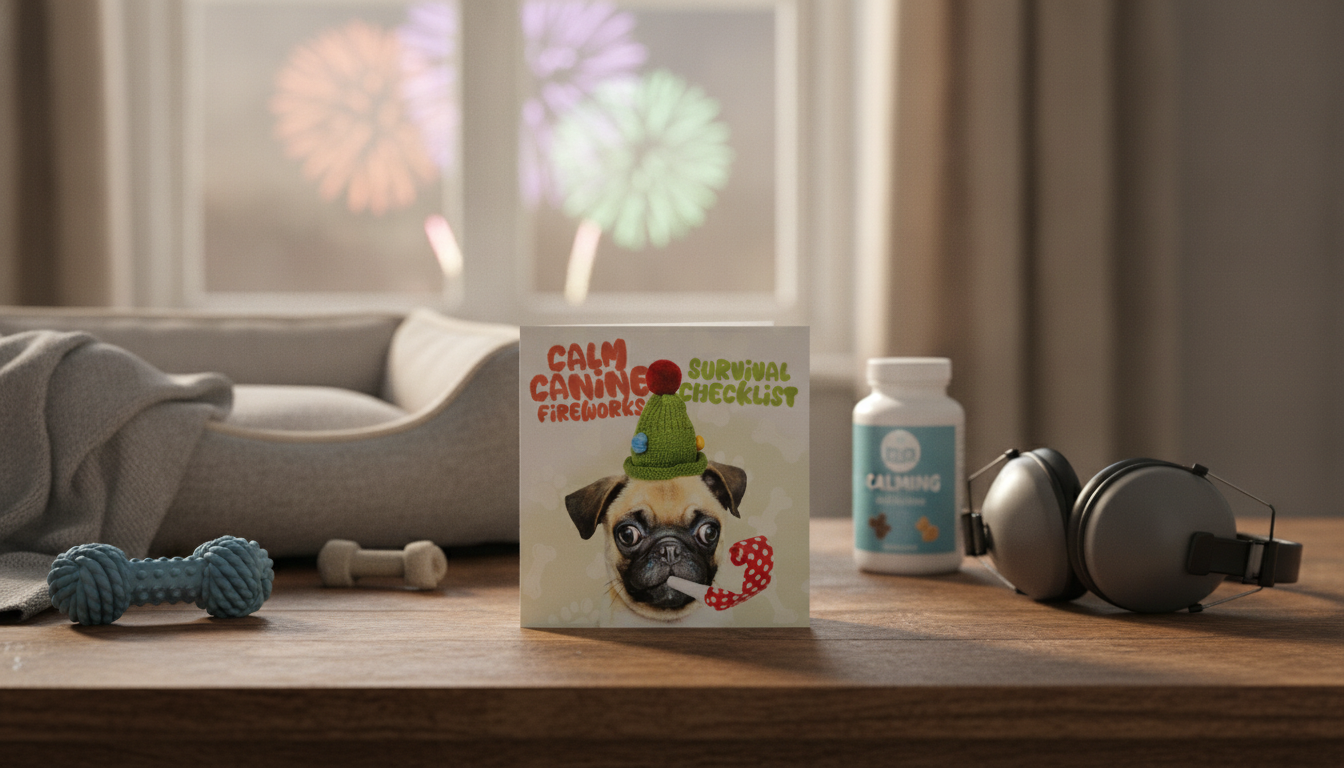
Calm Canine Fireworks Survival Checklist: A Practical Plan for Dogs Who Fear Loud Booms
Fireworks can trigger intense fear responses in many dogs—panting, pacing, shaking, hiding, or trying to escape. A calm, structured plan reduces risk and helps a dog feel safer before, during, and after noisy nights. The checklist approach below organizes preparation, the “during” routine, and recovery steps so nothing important is missed when the noise starts. For more guidance, see Dogs And Fear Of Fireworks – Guide Dog Foundation.
Why fireworks anxiety escalates so quickly
Fireworks can feel unpredictable and threatening to dogs, even when the family is safely indoors. Dogs hear higher frequencies, and the suddenness of a bang can register as immediate danger. Once startled, fear can build through anticipation—distant pops and echoes “prime” the nervous system so each new boom lands harder than the last. For further reading, see 10 Tips for Keeping Pets Safe and Calm During Fireworks.
Common signs include trembling, drooling, whining, trying to hide, refusing food, destructive chewing, and escape attempts. Safety is the priority because panicked dogs may bolt through doors, push through screens, or injure themselves while scrambling into tight spaces. Repeated exposure without a plan can also strengthen the fear pattern over time, making each holiday or neighborhood celebration more difficult.
Quick safety essentials to set up before any fireworks
- Update ID details: Make sure the collar tag and microchip registration reflect current contact info.
- Indoor-only rule during high-risk hours: Use baby gates and closed doors to block access to exits.
- Prepare a secure “calm zone”: Choose an interior room, covered crate, or closet-like nook with ventilation and easy cleanup.
- Reduce sound and light: Close windows and curtains; run a fan, white-noise machine, or steady music to mask booms.
- Stock calming tools in one place: Long-lasting chew, lick mat, high-value treats, water bowl, towels, and cleaning supplies.
- Leash-ready protocol: Keep a leash and harness accessible for fast bathroom breaks; avoid off-leash time even in fenced yards.
For a single-page plan you can keep with your supplies, consider the Calm Canine Fireworks Survival Checklist – Essential Guide for Managing Dog Anxiety During Fireworks. Having steps printed and visible helps reduce last-minute scrambling when the first bang hits.
Timeline plan: what to do 72 hours before through the next morning
Start early whenever possible. Predictability lowers baseline stress, and enrichment earlier in the day can take the edge off. If your dog uses medication or supplements, use them only with veterinary guidance and with enough lead time to confirm effects before an actual fireworks night.
Fireworks night checklist by timeframe
| Timeframe | Actions | Goal |
|---|---|---|
| 72–24 hours before | Maintain routine; add extra sniffing/enrichment; confirm ID info; test calm zone setup | Lower baseline stress and prevent last-minute scrambling |
| Day of (morning/afternoon) | Long walk or play session; puzzle meal; prepare chews/lick mats; close curtains early | Meet physical/mental needs before noise begins |
| 1–2 hours before | Potty break on leash; move dog to calm zone; start white noise/music; give enrichment | Settle before the first booms |
| During fireworks | Stay neutral and steady; allow hiding; offer licking/chewing; block exits; avoid forced comfort if it increases agitation | Prevent panic behaviors and reduce intensity |
| After (same night) | Keep indoors; offer water; short decompression routine; clean up calmly if accidents happen | Support recovery without adding pressure |
| Next morning | Quiet sniff walk; return to routine; note what helped/hurt for next time | Reset and improve future plans |
Step-by-step routine during fireworks (simple, repeatable)
When fireworks start, the goal is to reduce intensity and prevent unsafe choices. Use a routine that’s easy to repeat even if you’re tired or caught off guard.
If steady background audio is part of your plan, a dedicated device can make setup easier. A home audio option like the Vinyl Record Player C260, 3-Speed Bluetooth Vintage Turntable with Speakers can provide consistent sound (at a comfortable level) while you focus on keeping doors secured and your dog settled.
Common mistakes that can make fear worse
Extra supports to discuss with a veterinarian or trainer
For general safety guidance, review tips from the American Veterinary Medical Association (AVMA) and practical fear/anxiety education from the ASPCA.
Printable plan: keep everything in one place
Store the paper with your supplies (chews, lick mat, treats, spare leash, towels) so the routine becomes automatic. The Calm Canine Fireworks Survival Checklist is designed for quick reference when your attention is split.
Caregivers also need recovery after stressful nights. If you’re looking for a simple, restorative routine for the following day, the Nature’s Healing Power Checklist: Boost Your Mental Health with the Benefits of Nature can help you reset—especially useful when you’re managing repeated noise events across a season.
FAQ
Should a scared dog be comforted during fireworks?
Comfort is okay if your dog seeks it and relaxes with gentle contact. Avoid forcing touch or trapping your dog; focus on safety, a calm presence, and letting your dog choose the calm zone or preferred hiding spot.
Can a dog have a heart attack from fireworks?
Severe stress can be risky for dogs with underlying health issues. Contact a veterinarian promptly if your dog has heart disease, collapses, has trouble breathing, or remains extremely distressed long after the noise ends.
What if fireworks are unpredictable and start without warning?
Use a ready-to-go routine: close curtains, turn on white noise, guide your dog to the calm zone, block exits, and offer a licking or chewing activity. Keeping supplies and a printed checklist together makes it faster to respond.














Leave a comment