Toddler Emotions: Scripts to Calm Tantrums (Ages 1–4)
Big Feelings, Small Bodies: Helping Toddlers Learn Emotions
Toddlers feel everything in full volume—joy, frustration, fear, and disappointment—often with limited words and very little impulse control. That combination can look like sudden screaming, throwing, hitting, or collapsing on the floor because the “wrong” cup showed up. The good news: emotional skills are teachable, and they grow fastest when adults use a simple, repeatable approach—name the feeling, validate it, and guide a safe next step. Over time, those steady responses can reduce the intensity and length of meltdowns and build lifelong emotional resilience. For more guidance, see Resources for Families on Behavior and Development | NAEYC.
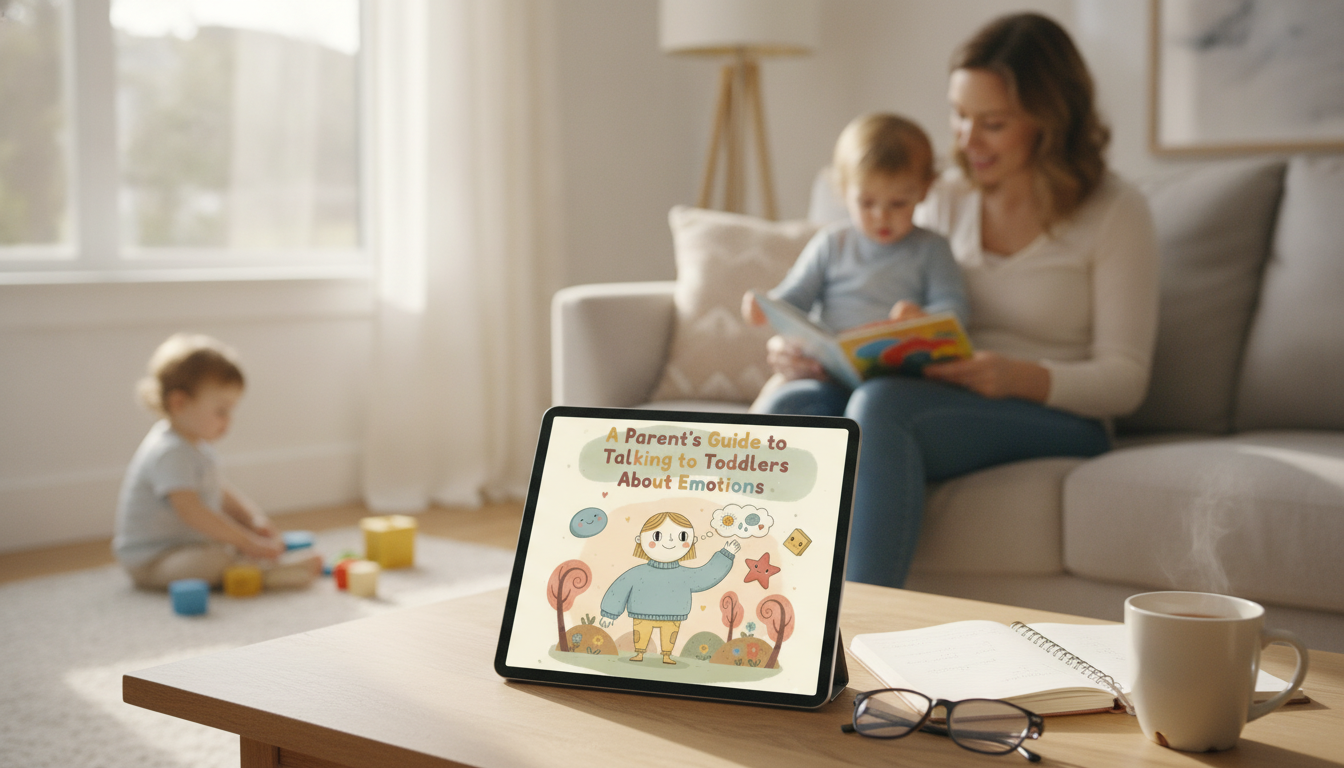
If daily moments feel hard to navigate, A Parent’s Guide to Talking to Toddlers About Emotions (Digital eBook) is designed to give moms and dads ready-to-say scripts and age-appropriate expectations—without having to improvise mid-tantrum. For further reading, see Books About Feelings for Babies and Toddlers | ZERO TO THREE.
Why emotions feel so intense for toddlers
From ages 1–4, a toddler’s brain is under rapid construction. The parts that support self-control, flexible thinking, and stopping an impulse are still developing, so frustration can flood their system quickly. Language also lags behind feelings—your child may understand more than they can express, which is why emotions often show up as behavior (hitting, throwing, screaming) instead of words.
Outbursts also spike when the body is stressed. Transitions, hunger, fatigue, and overstimulation can all turn a small disappointment into a big eruption. Consistent caregiver responses are powerful because they teach two core lessons again and again: “This feeling makes sense” and “Here’s what we do next.” That learning happens even when your toddler can’t explain what’s wrong.
What healthy emotional development looks like (ages 1–4)
Emotional development doesn’t look like constant calm. It looks like practicing (and re-practicing) coping skills with adult support.
- Age 1–2: Begins labeling simple feelings (mad, sad, happy) with adult help and relies heavily on co-regulation—your calm nervous system helps settle theirs.
- Age 2–3: Independence takes off, power struggles are common, and short scripts can start (“I’m mad,” “No!”).
- Age 3–4: A growing ability to wait briefly, choose between options, and try simple coping tools—usually with reminders.
- Regression: Big changes (new sibling, daycare, travel, illness) often bring temporary setbacks.
Common toddler emotions and supportive parent responses
| Emotion kids often show | What it can look like | Helpful words to try | A safe next step |
|---|---|---|---|
| Anger | Hitting, yelling, throwing | “You’re mad. I won’t let you hit.” | Offer a stomp spot, pillow squeeze, or hands-to-self practice |
| Sadness | Crying, collapsing, clinginess | “You’re sad. I’m here.” | Comfort + simple choice: hug or sit close |
| Fear | Hiding, refusing, freezing | “That felt scary.” | Name one small step + stay nearby |
| Jealousy | Grabbing, whining, pushing sibling away | “You want my attention.” | 1:1 connection moment + clear turn-taking |
| Overwhelm | Meltdown at noise/crowds | “Too much right now.” | Quiet break, water, fewer words |
A simple 3-step script to use during big feelings
When a toddler is upset, long explanations usually backfire. The most effective scripts are short, predictable, and repeatable across caregivers.
- Step 1: Name and validate. Match what you see: “You’re frustrated. That’s hard.”
- Step 2: Set the boundary. Calm and clear: “I won’t let you throw toys.”
- Step 3: Offer a replacement. Show what’s allowed: “You can throw this soft ball into the basket.”
How to build feelings vocabulary in everyday moments
Handling common hot spots: tantrums, transitions, and sibling conflict
Tantrums
Start with safety. Stay near, block harmful behavior, and use fewer words. Wait for the “storm” to pass before teaching. If you need a quick baseline for what’s typical, resources like the American Academy of Pediatrics (HealthyChildren.org) tantrum guide can help normalize the phase while keeping expectations realistic.
Transitions
Public meltdowns
Sibling conflict
Narrate neutrally: “You both want the truck.” Set limits: “I won’t let you push.” Coach repair in tiny steps: “Give space. Ask for a turn.” Social-emotional growth is gradual, and organizations like ZERO TO THREE highlight how much toddlers rely on adult coaching to learn these skills.
How the digital eBook supports moms and dads day to day
In real life, the hardest part isn’t knowing what to do—it’s remembering what to say when you’re tired, rushed, or overstimulated. A Parent’s Guide to Talking to Toddlers About Emotions (Digital eBook) is built for quick reference: a resource you can open on your phone during a tough moment or read in short bursts when things are calm.
Supporting the parent’s nervous system (so co-regulation is possible)
It also helps to create a family plan for high-stress times: a caregiver handoff, a quiet corner, or a simplified schedule on tough days. Small recovery habits add up—sunlight, a quick walk, or even a two-minute pause after bedtime. For extra support around stress relief, Nature’s Healing Power Checklist is a simple, low-effort way to build nature-based resets into a busy week.
FAQ
What should a parent say when a toddler is having a meltdown?
Use a short validation, then a clear limit if needed, and guide a safe next step: “You’re upset. I’m here. I won’t let you hit. Let’s squeeze this pillow.” Keep words minimal until your child is calmer.
At what age can toddlers start naming feelings?
Many toddlers begin using simple feeling labels around age 2, but understanding can start earlier through repeated naming, books, and caregiver modeling. Consistency matters more than perfect words.
How can parents teach a toddler not to hit when angry?
Calmly block the hit, state the boundary, label the feeling, and teach a replacement action (stomp, squeeze, ask for help). Then practice the replacement during calm moments so it’s easier to use when emotions run high.














Leave a comment