Weekly Outfit Planning: A 20-Minute Reset for Calm Mornings
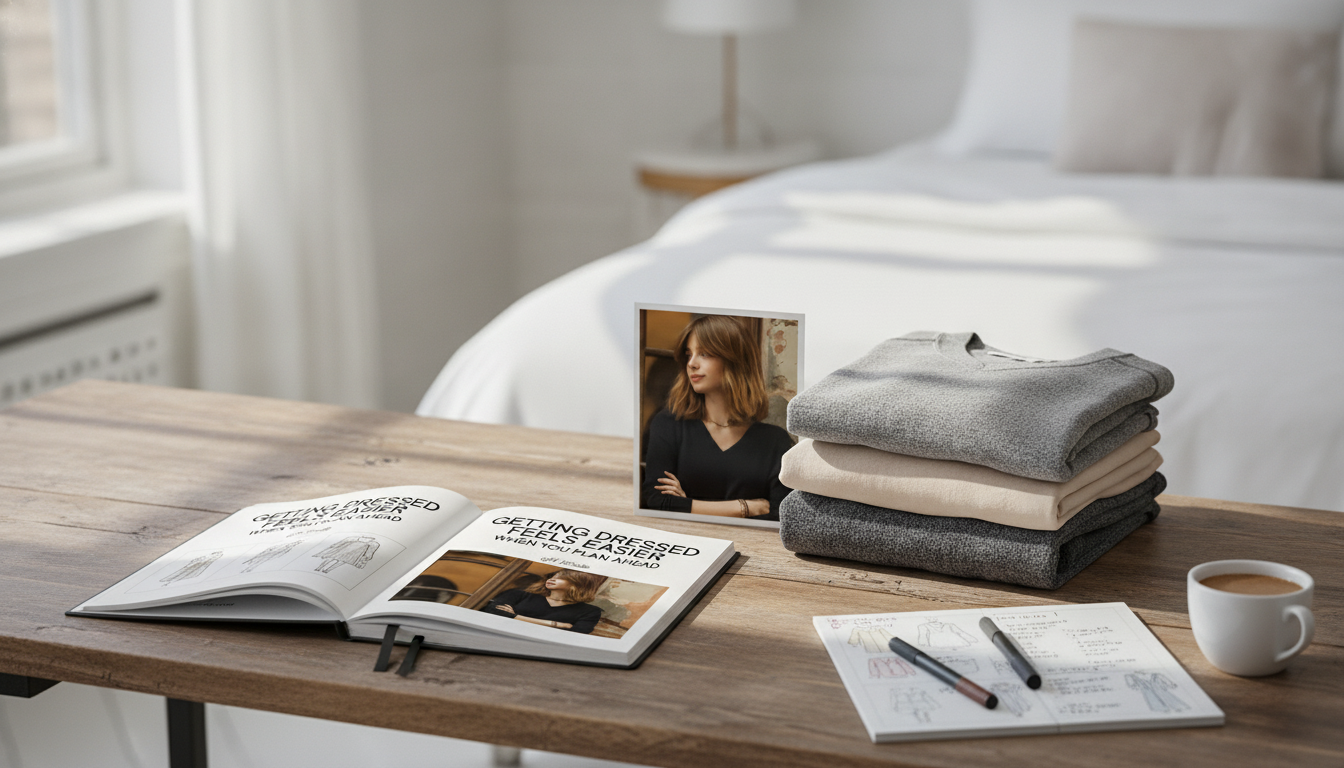
Getting dressed feels easier when you plan ahead
When mornings feel rushed, the smallest decisions can drain time and energy. A simple weekly outfit plan reduces decision fatigue, keeps laundry and errands predictable, and helps clothes get worn more evenly. With a short planning session and a repeatable system, getting dressed becomes quicker, calmer, and more consistent—without needing a brand-new wardrobe.
Decision fatigue is real: the more choices you make, the harder it can feel to make the next one. Planning outfits ahead of time turns daily clothing decisions into one quick weekly choice session. For a helpful overview of how decision fatigue works, see Harvard Business Review: What Is Decision Fatigue?.
Why planning outfits changes the whole morning
- Cuts down on last-minute choices by deciding once for the whole week instead of negotiating with your closet every day.
- Makes weather shifts and schedule changes easier when you’ve already built in a “swap” option and a layer plan.
- Prevents “nothing to wear” moments by spotting gaps (like missing base layers, clean socks, or the right shoes) before Monday arrives.
- Helps clothing last longer by balancing repeats and avoiding panic-wear of the same few pieces on heavy rotation.
A 20-minute weekly reset that sets up seven easy outfits
Keep this short and repeatable. The goal isn’t perfection—it’s removing friction from your mornings.
- Pick a planning day and time (Sunday evening works well) and treat it like a mini reset.
- Check your calendar: workdays, workouts, dinners, travel, dress codes, and anything you’d rather feel extra put-together for.
- Check the forecast twice: a broad look at the week, then a quick midweek recheck. For reliable updates, use the National Weather Service.
- Do a laundry scan: what must be clean by which day, and what can be swapped if something doesn’t make it out of the dryer.
- Choose a base formula for the week (for example: jeans + knit top + layer; dress + jacket; or trousers + blouse).
Build outfits from a small set of repeatable formulas
Outfit planning gets dramatically simpler when you stop aiming for seven totally unique looks and start building from a small “mix-and-match set.”
- Start with 2–3 bottoms (jeans, trousers, skirt) and 4–6 tops that mix easily with those bottoms.
- Add one layer option (cardigan, blazer, denim jacket) that works with most outfits so you don’t restart the matching process each day.
- Choose one comfort shoe and one dressier shoe, then assign them to days based on walking, driving, meetings, or dinners.
- Use color anchors: pick 1–2 neutrals plus 1 accent color for the week to reduce “almost matches.”
- Plan one intentionally easy outfit for the busiest day: soft fabrics, minimal accessories, reliable shoes, and a layer that always works.
Plan for real life: backups, stains, and surprise schedule changes
A good plan assumes something will change. A great plan has a calm way to handle it.
- Create one full backup outfit that can replace any day (top + bottom + shoes + outerwear). Keep it ready-to-grab.
- Keep a small “emergency kit” idea: lint roller, stain remover pen, safety pin, hair tie, and blister care.
- Assign delicate or wrinkle-prone items to lower-stress days when there’s more time for steaming or careful wear.
- Keep one weather pivot ready: a warmer layer or a rain-friendly shoe option that fits multiple outfits.
- If one item is essential (a specific bra, tights, or shoes), decide on a second-choice option before the week starts.
Weekly outfit planner template (copy-and-use)
Fill in plans first, then match outfits to those activities. Write a primary outfit plus a quick swap for each day. Add a simple prep note (laundry, steaming, mending, or setting aside accessories). Swapping days is still a win because the decisions are already made.
| Day | Main outfit | Shoes + outerwear | Backup swap | Prep note |
|---|---|---|---|---|
| Mon | Top + bottoms (work-ready) | Shoes + layer | Comfort outfit | Steam top |
| Tue | Casual-smart combo | Shoes + jacket | Alternate top | Check forecast |
| Wed | Busiest-day easy outfit | Comfort shoes + layer | Dress option | Set accessories |
| Thu | Meeting/event outfit | Dressier shoes + coat | Swap to trousers | Lint roll |
| Fri | Relaxed outfit | Sneakers + light layer | Alternate sweater | Laundry start |
| Sat | Errands/outdoors outfit | Weather-proof shoes + coat | Swap to leggings | Pack essentials |
| Sun | Home + reset outfit | Slip-ons + cozy layer | Simple tee set | Plan next week |
Make it effortless: set up a “ready zone”
Use the Outfit Planning Guide for the Week Ahead to keep the habit going
Getting Dressed Feels Easier When You Plan Ahead – Outfit Planning Guide for the Week Ahead is a simple way to keep your weekly plan, backups, and prep notes together without overcomplicating the process.
Pair your outfit reset with a quick wellbeing reset
If you like having a simple checklist to follow, consider Nature’s Healing Power Checklist: Boost Your Mental Health with the Benefits of Nature as an easy companion to your weekly planning rhythm.
Simple ways to stick with it (even when the week goes off-script)
FAQ
How many outfits should be planned for a week?
Plan 5–7 outfits based on your schedule, plus at least one true backup outfit you can wear on any day. Flexibility matters because life (and laundry) rarely follows a perfect script.
What if the weather changes midweek?
Keep one warm or rain-friendly pivot ready and do a quick midweek forecast check so you can swap days without re-planning everything. Writing a simple backup option for each day makes weather changes much easier to handle.
How can outfit planning work with a small wardrobe?
Use repeatable outfit formulas, re-wear reliable basics intentionally, and limit your color palette for the week so everything mixes. Rotating layers and accessories can make a small set of clothes feel fresh without adding more pieces.













Leave a comment